

Understanding industrial sealing solutions for critical applications starts with recognizing that failure is not an option in many industrial processes. When chemical plants, refineries, aerospace systems, or pharmaceutical manufacturing facilities experience seal failures, the consequences can range from costly production shutdowns to catastrophic safety incidents. The right sealing solution must withstand extreme temperatures, corrosive chemicals, high pressures, and vibration while maintaining integrity over years of continuous operation. Industrial engineers and maintenance professionals face the constant challenge of selecting sealing materials that match the specific demands of their applications, where even minor leaks can result in environmental violations, product contamination, or equipment damage costing hundreds of thousands of dollars.
The selection process for critical sealing applications requires thorough analysis of operating conditions including temperature ranges, chemical compatibility, pressure ratings, and mechanical stresses. Each industrial environment presents unique challenges that demand specialized sealing materials engineered for those exact conditions. Refineries processing sulfuric compounds need seals resistant to acidic corrosion, while steam systems operating above 500 degrees Fahrenheit require materials that maintain flexibility and compression at elevated temperatures. Food processing equipment must use seals approved for direct food contact that resist bacterial growth and withstand frequent washdown procedures. Understanding industrial sealing solutions for critical applications means matching material properties to operational realities rather than selecting based solely on initial cost.
Material science behind effective sealing
Modern sealing technology relies on advanced materials engineered at the molecular level to provide specific performance characteristics. Elastomeric compounds like fluorocarbon rubber, perfluoroelastomers, and ethylene propylene diene monomer offer varying degrees of chemical resistance, temperature capability, and mechanical strength. These synthetic rubbers can be formulated with different hardness levels, typically measured on the Shore A durometer scale from 40 to 90, with softer compounds conforming better to irregular surfaces and harder materials resisting extrusion under high pressure. The polymer chains in these materials are designed to resist degradation from oils, solvents, acids, and bases that would quickly destroy ordinary rubber seals.
Metal gaskets provide sealing solutions for applications beyond the capabilities of elastomeric materials, particularly where temperatures exceed 800 degrees Fahrenheit or pressures reach thousands of pounds per square inch. Stainless steel, Inconel, Monel, and other specialty alloys can withstand thermal cycling and chemical exposure that would vaporize organic sealing materials within minutes. These metal gaskets achieve sealing through precise engineering of contact surfaces and controlled deformation under bolt load, creating metal-to-metal contact that blocks fluid migration. Spiral wound gaskets combine thin metal winding with non-metallic filler materials to balance the strength of metal with the conformability needed for effective sealing. The selection between solid metal, spiral wound, or corrugated configurations depends on flange design, operating conditions, and maintenance accessibility.
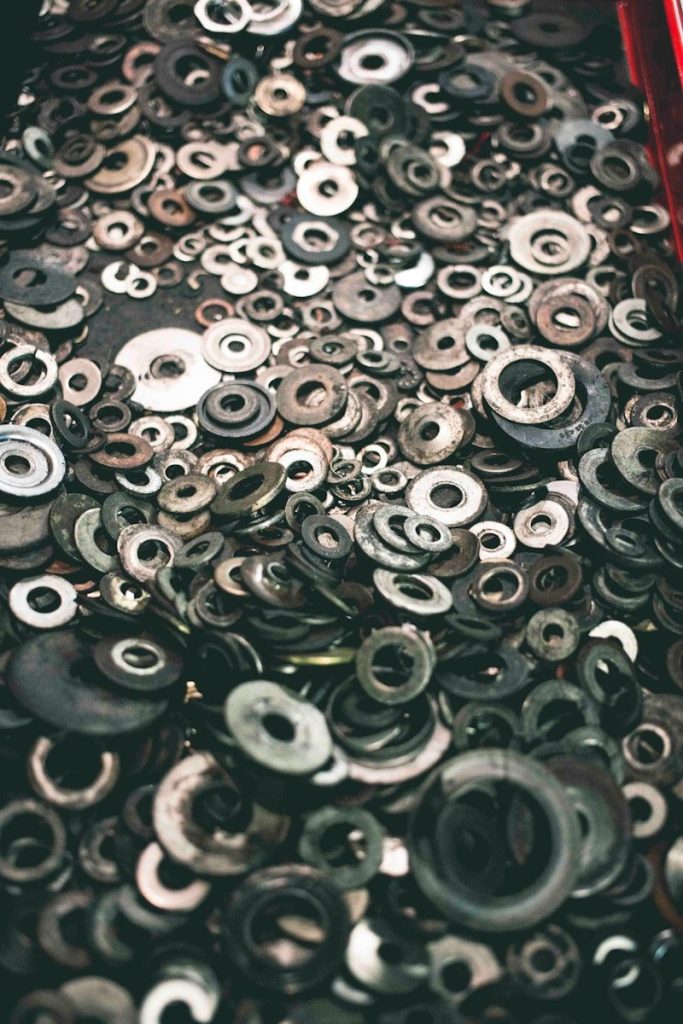
Gasket sheets and their versatile applications
Sheet gasket materials offer remarkable versatility for creating custom seals in virtually any shape or size required by industrial equipment. Manufacturers supply gasket sheets in rolls or pre-cut dimensions ranging from thin 0.4-millimeter sheets for delicate electronics cooling systems to robust 6-millimeter sheets for high-pressure hydraulic flanges. Compressed fiber sheets bonded with nitrile, neoprene, or aramid binders provide economical sealing for water, oil, and air applications at moderate temperatures below 400 degrees Fahrenheit. These materials can be die-cut, water jet cut, or hand-cut to match bolt hole patterns and sealing surface geometries with minimal waste.
Advanced gasket sheets incorporate expanded polytetrafluoroethylene, flexible graphite, or mica reinforcement to achieve superior chemical resistance and temperature capability. Pure expanded PTFE sheets handle virtually any chemical except molten alkali metals and fluorine gas, operating continuously at temperatures up to 500 degrees Fahrenheit. Flexible graphite sheets withstand temperatures approaching 850 degrees Fahrenheit in oxidizing environments and much higher in inert atmospheres, making them ideal for exhaust systems, boilers, and high-temperature process equipment. The sheet format allows maintenance technicians to fabricate replacement gaskets on-site without waiting for custom-molded parts, reducing downtime during emergency repairs. How many times has a production line remained idle waiting for a special-order gasket that could have been cut from sheet stock in minutes?
Engineering considerations for critical sealing
Proper installation practices determine whether even the highest-quality sealing solution will perform as engineered or fail prematurely. Flange surfaces must be inspected for scratches, warping, corrosion, or embedded debris that creates leak paths under the seal. Surface finish specifications typically require smoothness between 125 and 250 microinches Ra for soft gasket materials and 63 to 125 microinches Ra for metal gaskets, measured with calibrated profilometers to ensure compliance. Bolt torque sequences must follow manufacturer specifications, tightening fasteners in a star pattern to distribute compression evenly and prevent gasket distortion.
Gasket compression limits must be carefully controlled to avoid over-compression that extrudes material into the sealed cavity or under-compression that fails to fill surface irregularities. Most fiber-based and elastomeric gaskets require 30 to 50 percent compression to achieve optimal sealing, while PTFE materials may need 60 to 70 percent compression due to their tendency to cold flow under load. Torque wrenches calibrated to within 4 percent accuracy ensure that bolt tension creates the specified gasket stress, typically between 2,000 and 10,000 pounds per square inch depending on material type. Chemical compatibility charts published by gasket manufacturers list thousands of chemicals with compatibility ratings, but testing should confirm performance with actual process fluids when stakes are high.
Maintenance strategies that extend seal life
Predictive maintenance programs monitor sealing system performance to detect degradation before catastrophic failure occurs. Ultrasonic leak detectors can identify high-frequency sound emissions from tiny leaks invisible to the eye and undetectable by smell, allowing early intervention. Thermal imaging cameras reveal hot spots indicating seal bypass in steam systems or cold spots suggesting cryogenic leaks. Vibration analysis identifies misalignment or bearing wear that subjects seals to excessive side loads and premature failure. These diagnostic techniques enable condition-based gasket replacement rather than arbitrary time-based schedules that waste functional seals or risk using deteriorated ones past their useful life.
Documentation systems tracking seal installations, materials used, torque values applied, and service life achieved provide invaluable data for optimizing sealing strategies. When a particular flange joint requires regasketing every six months while similar joints operate for years, systematic analysis can reveal whether the issue stems from improper bolt torque, wrong gasket material, surface finish defects, or thermal cycling effects. Understanding industrial sealing solutions for critical applications includes recognizing patterns across your facility’s maintenance history. Some operations maintain photographic records of gasket installations showing compression appearance, which helps technicians replicate successful installations and diagnose failures. Failure analysis performed on removed gaskets often reveals whether leakage resulted from chemical attack, thermal degradation, mechanical damage, or installation errors, guiding improvements to prevent recurrence.
Future developments in sealing technology
Research laboratories continue developing next-generation sealing materials that push performance boundaries. Perfluoroelastomers with improved low-temperature flexibility extend the operating range for seals that previously became brittle below freezing. Graphene-reinforced elastomers show promise for dramatically increased strength and thermal conductivity. Smart seals embedded with sensors can transmit real-time data about temperature, pressure, and chemical exposure to monitoring systems that predict remaining service life. These innovations will gradually migrate from aerospace and semiconductor manufacturing into broader industrial applications as production volumes increase and costs decline.
Environmental regulations drive demand for sealing solutions that eliminate fugitive emissions of volatile organic compounds and greenhouse gases. The Environmental Protection Agency estimates that leak detection and repair programs at industrial facilities can reduce emissions by 40 to 60 percent compared to uncontrolled operations. Low-emission packing systems, spring-energized seals, and precision-machined metal gaskets help facilities achieve compliance while reducing product loss. Does your sealing strategy account for the total cost of ownership including energy waste from compressed air leaks or product loss from process fluid seepage? Understanding industrial sealing solutions for critical applications now means evaluating environmental impact alongside traditional performance metrics. The sealing technologies you specify today will influence operating costs, safety records, and regulatory compliance for years to come, making informed selection more important than ever in our increasingly demanding industrial landscape.
